
NBA Overtime Betting Rules on UK Sportsbooks
 Available in US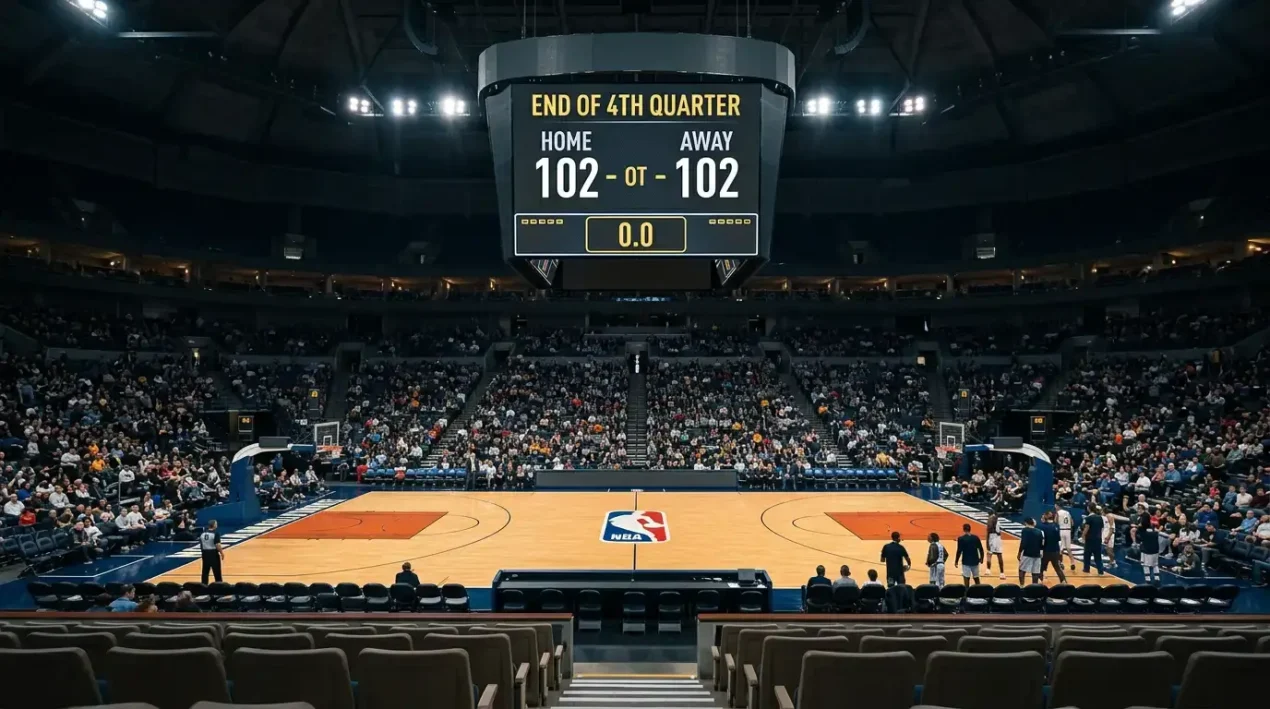
That kind of discrepancy catches more UK punters than you might expect. Live/in-play wagering now accounts for over 62% of all online sports betting revenue, and with NBA games going to overtime roughly 6% of the time across a full season, the question of how extra periods affect your bet is not academic — it is practical, and the answer depends entirely on the market type.
Bookmaker Settlement Rules for NBA Overtime Markets
The UK sports betting market generates approximately 2.48 billion pounds in gross gaming revenue each year, and a significant share of complaints to bookmaker customer service teams involve settlement disputes. Overtime is one of the most common triggers. The root of the confusion is that different markets treat regulation time and overtime differently, and most bookmakers bury the specifics in their general basketball rules rather than flagging them on the bet slip itself.
Moneyline bets — labelled “match winner” at several UK operators — include overtime. The logic is simple: the NBA does not allow draws, so a moneyline bet needs a winner. If the game is tied at the end of the fourth quarter, it plays on until one team leads at the end of an overtime period. Your moneyline wager rides until that happens, whether it takes one overtime or three.
Point spread bets also include overtime at the vast majority of UK bookmakers. If you backed a team at -4.5, the final score including any overtime periods determines whether that spread was covered. This is worth knowing because overtime tends to compress margins. A team that trailed by six at the end of regulation and forces overtime now has a real chance of covering a spread they were losing before the buzzer. The extra five minutes can swing a spread result dramatically.
Totals — over/under bets on combined points — include overtime as well. This is the one that creates the most surprise outcomes. A game tracking comfortably under 215.5 through four quarters can sail over during a high-scoring overtime period. The additional possessions in a five-minute overtime can add anywhere from eight to twenty-five combined points, turning a clear “under” into a loss.
Where the rules change sharply is in period-specific markets. First quarter, second quarter, third quarter, and fourth quarter bets are settled on the score of that quarter alone. Overtime scoring does not count towards any quarter bet. The same applies to first-half and second-half bets: the first half covers quarters one and two only, the second half covers quarters three and four only, and overtime exists outside both.
Player prop bets are another category that generally includes overtime. If you bet on a player to score over 24.5 points, every point they score in regulation and overtime counts. This matters more than it sounds — a star player who is on 23 points at the end of the fourth quarter gets extra minutes to push over the line if the game extends. Some of the most celebrated prop bet wins I have tracked over the years came courtesy of overtime stat-padding.
Quarter and Half Bets: The Overtime Exception
I learned this the hard way during the 2022 playoffs. I had a fourth-quarter over bet that looked dead with two minutes left, then the teams combined for nine points in a furious late stretch that forced overtime. The game went on. More points were scored. My bet, however, was already settled — the fourth quarter ended when regulation ended, and those overtime points belonged to a different statistical bucket entirely.
The reasoning behind this rule is consistent if you think about it structurally. A quarter bet is a wager on a twelve-minute window of play. An overtime period is a separate five-minute window. Combining them would change the nature of the bet from “what happens in these twelve minutes” to “what happens in these twelve minutes plus any bonus time that may or may not occur.” Bookmakers keep them separate to preserve the integrity of the market definition.
Half bets follow the same principle. The first half is quarters one and two. The second half is quarters three and four. Even though overtime logically follows the second half, the points scored in overtime are excluded from second-half settlement. If you are building a quarter-based betting strategy, understanding this boundary is fundamental — it affects how you assess value on fourth-quarter lines when a tight game looks likely to go to extra time.
Some bookmakers offer a separate market specifically for overtime scoring — a “will there be overtime” yes/no proposition, or an overtime winner market once OT is confirmed during live betting. These are niche but worth noting. If you expect a game to go to overtime and want to capitalise on the extra period directly, that is the market designed for it.
Double and Triple Overtime: Edge Cases
Most overtime games are settled in a single extra period. But double overtime happens several times each NBA season, and triple overtime, while rare, is not unheard of. The 2023-24 season produced a handful of double-overtime contests, and each one created chaos in the totals markets.
The settlement rules for multi-overtime games are an extension of the single-overtime rules. Moneyline, spread, and totals bets include all overtime periods. If a game goes to triple overtime and the final combined score is 290, your totals bet settles against that 290, not against what the score was at the end of regulation or the first overtime. The same applies to player props — every stat accumulated across every overtime period counts.
This creates asymmetric risk on totals bets specifically. When you bet the over, a multi-overtime game is almost always good news — the extra minutes pile on points. When you bet the under, every overtime period is another nail. I have seen under bettors lose by thirty points in triple-overtime games that were comfortably under the line through four quarters.
Spread bets in double or triple overtime tend to be less affected, because the extended play gives both teams more opportunities to score. The margins can widen or narrow, but there is no systematic bias the way there is with totals. That said, fatigue and foul trouble in multi-overtime games can produce wildly unpredictable late-game swings. A team’s bench depth, something you might not consider for a standard game, becomes a genuine factor when starters are logging forty-five or fifty minutes.
One practical point: if you are betting live and the game enters a second overtime, check whether the bookmaker has suspended certain markets. Some operators pause props and alternative lines during multi-OT and only keep the basic moneyline active. Others maintain a full live menu. Knowing your bookmaker’s approach before the situation arises saves you from scrambling when the game is on the line.
Settlement Disputes and How to Handle Them
Despite clear rules, disputes happen. The most common one I see involves punters who assumed their fourth-quarter bet included overtime because the game “was not over yet.” The bookmaker’s terms will almost always side with the quarter-only settlement. If you believe a bet was settled incorrectly, screenshot your bet slip, note the exact game time and score, and contact customer support through the app’s live chat. UK-licensed operators are required to have a complaints procedure, and if you cannot resolve the issue directly, you can escalate to an Alternative Dispute Resolution provider — the operator must tell you which one they use.
The better approach, obviously, is to avoid the dispute entirely by reading the basketball settlement rules before you place the bet. Every UK bookmaker publishes these, usually under “Rules” or “Help” in the basketball section. Spending five minutes on that page will save you hours of frustration and the hollow feeling of watching your bet lose on a technicality you did not know existed.
How do different bet types settle when an NBA game goes to overtime?
Moneyline, point spread, totals, and player prop bets all include overtime in their settlement. Quarter bets and half bets do not — they are settled on the score of that specific period only. Overtime scoring is excluded from all period-specific markets at UK bookmakers.
What happens to my NBA spread bet if the game goes to overtime?
Your spread bet remains live through overtime. The final score, including all overtime periods, determines whether the spread was covered. This means a team trailing in regulation can still cover the spread if they outperform in overtime.
This material was created by the COURTSIDE team.
Related posts

The Under-30 Surge Driving NBA Betting in Britain

Why 76% of Young UK Bettors Already Bet on Mobile