
NBA Live Betting: In-Play Markets and Dynamic Odds
 Available in US
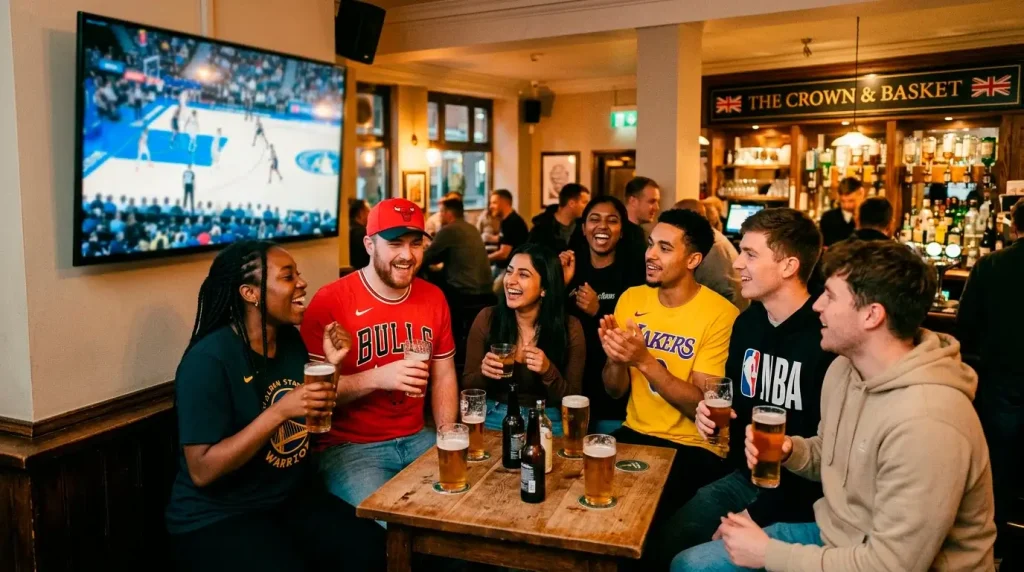
The growth in live NBA betting has been explosive. In-play wagering now accounts for 62.35% of all online sports betting revenue, and the NBA’s fast-paced, high-scoring format is a primary driver of that share. Mobile platforms handle more than 70% of total basketball betting volume, which means most live bets are placed from phones – on sofas, on trains, in pubs, wherever the game happens to find you. For UK punters watching NBA games on Sky Sports or Prime Video, the live betting window opens every evening and runs deep into the night.
What makes live betting different from pre-game wagering is not complexity. It is speed. The odds move with every possession. A missed free throw, a turned ankle, a tactical timeout – each event shifts the market. The punter who reads these shifts faster and more accurately than the bookmaker’s algorithm has an edge that simply does not exist in pre-game markets, where the line has been hammered by thousands of bettors over hours or days before tip-off.
Available Live In-Play NBA Markets at UK Bookmakers
Before tip-off, you see the standard menu: moneyline, spread, totals, player props. Once the game starts, that menu expands and contracts like an accordion, with markets opening and closing depending on the game state.
The core live markets mirror the pre-game offering. The moneyline updates with every score change – a team that was 1/3 pre-game might drift to 4/6 after falling behind by eight in the first quarter. The live spread adjusts in near-real time: if the pre-game spread was -6.5 and the favourite trails by four at half-time, the in-play spread might flip to the favourite at +1.5 or the underdog at -1.5. Live totals shift based on the scoring pace so far – if the first half produces 120 combined points, the live total for the full game will be higher than the pre-game number.
Quarter and half markets are where live betting gets genuinely interesting. At the start of the third quarter, bookmakers open a fresh set of lines: third-quarter winner, third-quarter spread, third-quarter total. These are mini-games within the game, and they reward punters who track how specific teams perform in specific quarters. Some teams are notorious slow starters who come alive after half-time adjustments. Others dominate the first quarter behind their starting unit and fade once the bench rotations begin.
Player props also go live, though availability varies between operators. Points, rebounds, and assists markets for star players typically remain active through the third quarter. As the game enters the fourth, many bookmakers suspend player props to manage risk – the remaining sample of minutes is too short for their models to price confidently. If you are planning to bet a live player prop, the sweet spot is usually between half-time and the midpoint of the third quarter, when the bookmaker still has the market open and you have enough game data to form a view.
Next-basket and race-to-points markets are higher-variance live options. “Next team to score” is essentially a coin flip with a thin bookmaker edge, while “race to 100 points” or “race to 30 points in the quarter” are momentum bets with volatile odds. I treat these the way I treat first-basket props – as side entertainment, not strategic plays.
Reading Momentum Shifts: When to Strike In-Play
There is a moment in almost every NBA game where the live odds overreact. I have seen it hundreds of times: a team goes on a 12-0 run, the in-play spread lurches six points in their favour, and suddenly the market is pricing a blowout that rarely materialises. The team that just went on the run calls timeout, substitutes its bench unit, and the opponent chips back. By the time equilibrium returns, the window of value has closed. The punter who struck during the overreaction collected; everyone else watched the odds snap back.
Recognising these moments requires understanding what drives NBA momentum shifts. The most common trigger is a lineup change. When a team’s starting five checks back in after a bench stint, the offensive efficiency typically jumps. If that return coincides with a timeout, the coaching staff has drawn up a play, the crowd energy has shifted, and the run begins. But the run is mechanical, not magical – it is a better lineup playing against a worse one, which is temporary by definition.
Foul trouble is another trigger that live markets underweight. When a team’s best defender picks up his fourth foul early in the third quarter, he sits. The opposing offence immediately benefits, and the live odds adjust. But the market often overadjusts, pricing the rest of the game as though the fouled-out player is gone for good. In reality, he returns midway through the fourth quarter, the defensive dynamic reverts, and the market corrects. The window between overreaction and correction is your opportunity.
Injury timeouts create a different kind of value. When a key player goes to the locker room, the in-play odds swing dramatically – sometimes before the severity of the injury is even known. I have seen live spreads move four points on a twisted ankle that the player returned from three minutes later. If you know the player’s injury history and the team’s depth at his position, you can assess the situation faster than the algorithm updating the odds board.
The discipline in live betting is not finding the moment. It is waiting for it. I keep a live game on screen, a notebook with my pre-game spread estimate, and a mental list of scenarios that would create a value gap between my estimate and the in-play line. When the gap appears, I act. When it does not, I watch the game and leave my account untouched. The worst habit in live betting is betting for the sake of it – placing a wager because the game is on and the market is open, rather than because a genuine opportunity has emerged.
Using Bet Builder During a Live NBA Game
Live bet builders are relatively new at UK sportsbooks, and they are not yet as polished as their pre-game equivalents. But when they work, they offer something no other in-play market provides: the ability to combine a live spread with a live player prop and a live total into a single wager with multiplied odds – all while the game is in progress.
The concept mirrors the pre-game bet builder. You select two or more legs from the same game, the bookmaker’s algorithm calculates the combined odds, and you place a single bet. The difference in a live context is that the underlying probabilities are shifting with every possession, which means the combined odds are recalculated in near-real time. You might construct a builder, hesitate for thirty seconds, and find the combined price has moved by a full point.
Mobile platforms carry over 70% of total basketball betting volume, and live builders are heavily optimised for mobile screens. The interface is typically a simple accumulator-style slip: tap the legs you want, watch the combined odds update, confirm the bet. Speed matters here more than in any other market. If you see a combination you like, place it immediately. The odds will not wait while you deliberate.
The strategic application of live builders is narrower than it appears. Most of the time, combining live legs adds complexity without adding value – you are stacking uncertainty on top of uncertainty. But there is one scenario where live builders genuinely shine: half-time. At the half, the game pauses for fifteen minutes. You have time to review first-half performance, check second-half tendencies, and construct a builder based on informed analysis rather than reactive impulse. A second-half spread combined with a star player’s second-half points over, based on first-half usage data, is the kind of live builder that can be analytically grounded rather than emotionally driven.
I use live builders sparingly – perhaps two or three per week during the season. Each time, the trigger is the same: a half-time situation where my analysis of the first half gives me a strong view on two correlated second-half outcomes. If I cannot articulate why the legs are correlated and why the combined price underestimates the joint probability, I leave the builder alone.
Cash-Out Decisions: When to Lock Profit and When to Let It Ride
Cash-out is the feature bookmakers love you to use. Not because it is bad for you – sometimes it is genuinely the right call – but because the cash-out price almost always includes an additional margin that benefits the bookmaker. Understanding when that margin is acceptable and when it is not is the difference between a smart exit and an expensive one.
Here is how cash-out works in a live NBA context. You placed a pre-game bet on the underdog at +6.5. Midway through the third quarter, the underdog is up by four. Your bet is looking strong, and the bookmaker offers you a cash-out value of, say, 85% of the potential full payout. Take the cash-out, and you lock in that profit regardless of what happens in the fourth quarter. Decline it, and your bet rides to the final buzzer – full payout if the underdog covers, nothing if they collapse.
The cash-out decision is a probability question. What is the likelihood that your bet still wins if you let it run? If you estimate that probability at 75%, and the cash-out offer represents less than 75% of the full return, the cash-out is a bad deal mathematically. You are selling a winning position at a discount. If you estimate the probability at 55% and the cash-out represents 70% of the full return, you are being offered a premium for early exit, and taking it becomes rational.
The problem is that most punters do not think in probabilities during a live game. They think in emotions. The underdog is up by four, but the favourite just called timeout, and the crowd noise is building. The urge to lock in profit – to avoid the pain of watching a winning position evaporate – overwhelms the maths. Bookmakers know this. The cash-out feature is designed to exploit loss aversion: the psychological tendency to feel losses more acutely than equivalent gains.
My rule is simple. I set a pre-game exit threshold before the game starts. If I bet the underdog at +6.5, I might decide: “I will cash out only if the live spread flips past -3.5 in the underdog’s favour and the cash-out offer exceeds 80% of the full return.” That pre-commitment eliminates the in-game emotional calculation. Either the condition is met or it is not. No deliberation, no second-guessing.
Partial cash-out, offered by several UK operators, adds a middle path. You can cash out half your stake and let the other half ride. This is useful when your conviction has weakened but has not disappeared – you secure some return while retaining upside. I use partial cash-out more frequently than full cash-out, particularly in games where the momentum has genuinely shifted against my position but a comeback is still plausible.
The Mobile Advantage: Betting NBA Live From Anywhere in the UK
I once placed a live bet during the third quarter of an NBA game from the back of an Uber in Birmingham. The game was streaming on my phone, the sportsbook app was one swipe away, and the line I wanted appeared for exactly twelve seconds before moving. That is not an unusual scenario for a UK NBA bettor in 2026 – it is the norm.
The numbers confirm the shift. Ninety-five percent of online bets in the UK are placed from home, but among 18-to-24-year-olds – the demographic most engaged with NBA betting – 76% use mobile phones as their primary device. The sportsbook app has replaced the desktop browser as the default betting interface, and for live markets, mobile is not just convenient. It is functionally necessary. Live odds move too fast for a workflow that involves opening a laptop, navigating to a site, and clicking through menus. By the time you reach the market, the price has changed.
The mobile advantage for NBA live betting is partly about speed and partly about access. NBA games tip off at inconvenient hours for UK viewers – typically 11 p.m. to 3 a.m. GMT during the regular season. Most people are not sitting at a desk at midnight. They are in bed, on the sofa, or out with friends. A mobile app with push notifications for line movements or score updates keeps the live market accessible in situations where a desktop never could.
Adam Woodhead, a senior analyst at The Investors Centre, has noted that two policy moves are pushing the spread bet tax advantage wider through 2026 as the capital gains tax annual exempt amount has dropped sharply. That fiscal context matters for UK bettors who use spread-betting platforms alongside traditional fixed-odds bookmakers – the tax treatment differs, and mobile access to both types of platform means you can shop for the best deal in real time, even mid-game.
One practical note: battery life and signal strength are genuine constraints. I have lost value opportunities because my phone died in the fourth quarter, or because a dodgy Wi-Fi connection caused a five-second lag that turned a good price into a gone price. If you bet NBA live regularly, keeping a charger nearby and testing your connection before the game starts is not paranoia – it is preparation.
Latency, Odds Lag, and Other In-Play Risks
Live betting has a dirty secret: the odds you see on your screen are not the odds that exist at the arena. There is always a delay – a few seconds between the real-time action and the updated prices on your sportsbook app. That delay is called latency, and it works against you more often than it works for you.
Bookmakers use data feeds from the arena – usually provided by a third-party sports data company – to update in-play odds. Those feeds run a few seconds behind live action. If you are watching via a satellite broadcast, your feed is an additional few seconds behind the data feed. The bookmaker’s algorithm has already priced in the basket you just watched on your screen. When you rush to bet based on what you saw, the odds have already moved.
This latency gap is unavoidable. No amount of fast Wi-Fi or premium streaming eliminates it. The practical consequence is that you should never base a live bet purely on something you just witnessed. By the time you process the visual information, open the app, and place the bet, the market has already adjusted. Live betting rewards anticipation – predicting what will happen next, not reacting to what already has.
Odds suspension is another in-play risk. Bookmakers routinely suspend live markets during critical moments: the final two minutes of a close game, any possession during a timeout, any play under review. These suspensions can last thirty seconds or three minutes, and they always coincide with the moments when the value gaps are largest. If you planned to strike during a late-game momentum shift, you may find the market closed precisely when you need it open.
The final risk is overtrading. Pre-game betting has a natural limit: you place your bet and wait. Live betting has no such brake. Every possession offers a new data point, a new line movement, a new temptation. The punter who places four live bets per game across five games a night is placing twenty bets in a single evening – and paying the bookmaker’s margin on every single one. That margin compounds brutally over volume. I limit myself to one or two live bets per game, placed only when a clear value gap emerges. The discipline of tracking schedule fatigue and rest patterns pre-game reduces the need for in-game improvisation, because the strongest live opportunities often align with the situational edges you identified before tip-off. Stay ahead of the bookmakers with real-time updates from our premier basketball betting hub.
Frequently Asked Questions
How does in-play NBA betting work at a UK sportsbook?
In-play betting lets you place wagers while an NBA game is in progress. The odds update in near-real time based on the score, time remaining, and game flow. You can bet on live moneylines, live spreads, live totals, quarter markets, and selected player props. Markets may be suspended during timeouts, reviews, or the final minutes of close games.
Can I use bet builder on live NBA markets?
Several UK bookmakers offer a live bet builder that lets you combine multiple in-play selections from the same game into one wager. Availability varies by operator and by game – live builders are more commonly offered for high-profile matchups. The combined odds recalculate in real time, so confirm your bet promptly once you see a price you like.
What is the best quarter to place live NBA bets?
The third quarter tends to offer the most value for live bettors. Half-time adjustments create tactical shifts that the market sometimes underprices, and you have a full half of data to inform your decisions. The start of the third quarter is also when most bookmakers open fresh quarter-specific markets, giving you a clean set of lines to evaluate.
Does cash-out affect my live bet returns?
Yes. The cash-out price always includes a bookmaker margin, which means you receive less than the mathematically fair value of your position. Cash-out is a convenience feature that lets you lock in profit or limit losses early, but the trade-off is a reduced return compared to letting the bet settle at full value. Partial cash-out lets you secure some profit while keeping a portion of your bet active.
This material was created by the COURTSIDE team.
Related posts
The Under-30 Surge Driving NBA Betting in Britain

Why 76% of Young UK Bettors Already Bet on Mobile