
NBA London Game Betting: Neutral Court Dynamics
 Available in US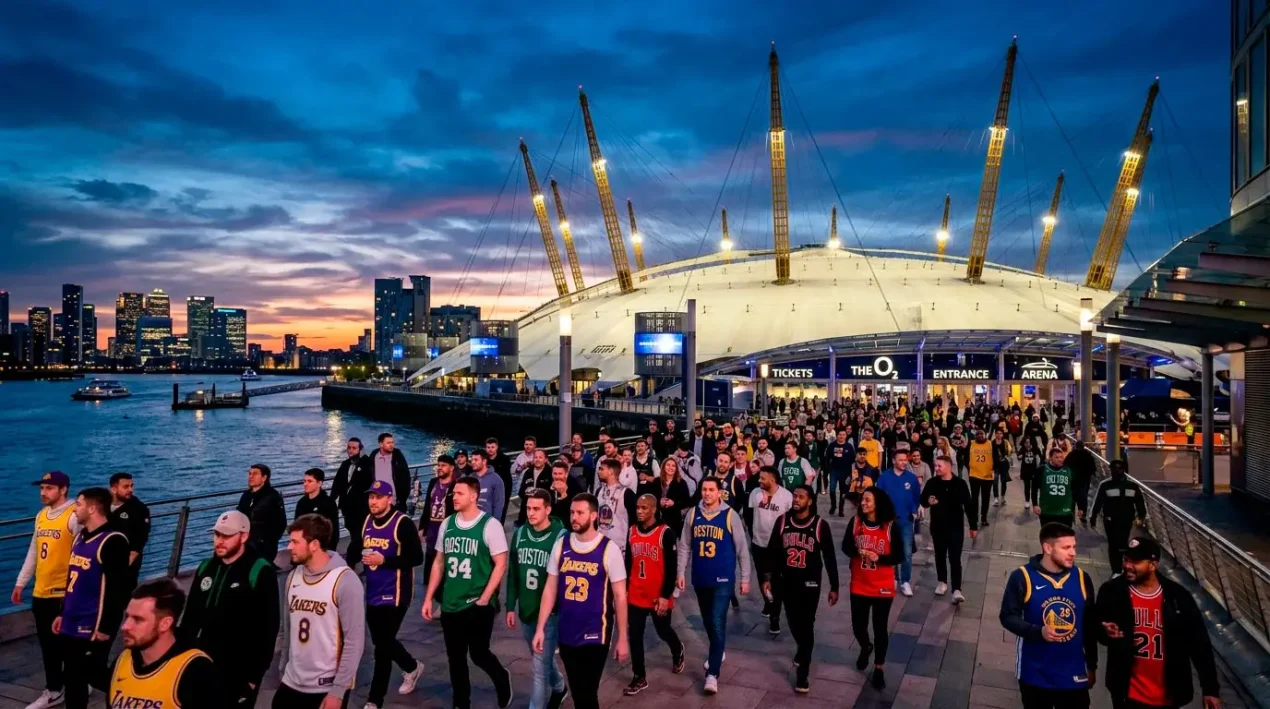
Neutral-Court Dynamics and Odds Shifts in London NBA Games
Home-court advantage in the NBA is typically worth around three points on the spread. At The O2, there is no home team. The bookmaker must decide how to handle this absence, and the approach varies. Some operators set the line as though the game were played on a neutral court, removing the home-court premium entirely. Others designate one team as the nominal “home” side — usually the first team listed in the matchup — and apply a reduced home-court adjustment of one to one-and-a-half points.
The inconsistency between operators creates an immediate opportunity. If one bookmaker prices the game with a two-point home-court premium and another removes it entirely, the difference in spread is two full points — a significant gap in a market where half a point matters. I compare lines across at least four UK bookmakers for the London Game specifically, because the pricing divergence is wider than on any other NBA regular-season game.
The crowd dynamics at The O2 add another layer. The audience is enthusiastic but not partisan in the way a home crowd in Boston or Memphis would be. There is no sustained hostility toward the visiting team, no coordinated noise designed to disrupt free throws or communication. Both teams play in what amounts to a festival atmosphere — supportive, loud, but neutral. This means that one of the primary mechanisms through which home-court advantage operates — crowd-induced pressure on referees and opposing players — is effectively absent. The team that benefits most from a neutral crowd is typically the team with less overall talent, because they are not disadvantaged by playing “away.”
Transatlantic Travel and Jet-Lag Factors
Both teams travel to London, but the travel circumstances are not identical. The NBA typically sends both teams to London several days before the game, giving them time to adjust to the time difference and conduct promotional events. But the adjustment is never complete. London is five hours ahead of the US Eastern time zone and eight hours ahead of Pacific time. A team from the West Coast faces a larger circadian disruption than an East Coast team, and that difference matters for performance.
I look at three factors when evaluating the travel impact. First, where each team played their last game before travelling. A team that played in Miami on Tuesday and flew to London on Wednesday has a shorter adjustment window and a shorter flight than a team that played in Portland on Sunday and flew to London on Monday. Second, whether either team had a back-to-back in the three games prior to travelling — accumulated fatigue compounds the jet-lag effect. Third, the team’s schedule after the London Game. A team that flies directly from London to a West Coast game faces a brutal recovery, and coaches sometimes manage minutes in the London Game to protect players for the subsequent stretch.
The bookmaker’s model accounts for rest days and travel distance, but the granularity of the London Game travel situation is unique enough that the standard model inputs may not fully capture it. I have found small but consistent value in identifying which team arrives in London with more rest and less prior travel, particularly when the spread does not reflect that advantage.
Betting Angles Specific to NBA Global Games
The tip-off time is the most underrated factor. NBA London Games typically start at 8pm GMT — which is 3pm Eastern and noon Pacific. Players accustomed to playing at 7pm or 8pm local time are competing at what their bodies perceive as early afternoon. Shooting percentages in early-afternoon NBA games tend to be marginally lower than in evening games, and this effect is amplified by jet lag. I lean toward the under on totals for London Games, on the thesis that the combination of neutral-court dynamics, unfamiliar surroundings, and circadian disruption produces a slightly lower-scoring game than the teams’ season averages would suggest.
Player prop markets are also worth examining carefully. Stars in London Game lineups tend to play fewer minutes than their season average if the game becomes non-competitive — coaches are conscious of injury risk in a game played on an unfamiliar court surface (The O2 uses a portable court) and prefer to protect their investments for the demanding schedule that follows. If the line on a star player’s points total is set based on their season average of 34 minutes per game but they are likely to play 28-30 in a blowout scenario, the under on their props carries hidden value.
Finally, the London Game is a spectacle, and spectacle games produce unusual patterns. Players tend to play for the crowd — more flashy passes, more aggressive dunking, more three-point attempts. This can push the scoring style toward high-variance play, which makes player prop overs slightly more attractive on perimeter players and slightly less attractive on interior-focused big men whose contributions come from disciplined positioning rather than crowd-pleasing plays.
The London Game sits at the intersection of sport and entertainment, and the betting market reflects that ambiguity. The growth of the NBA’s UK audience means the London Game will only become a bigger event in coming years, and the betting markets around it will deepen accordingly. For now, the relatively thin historical data and the unique neutral-court dynamics make it one of the most interesting single-game betting events on the UK basketball calendar.
Is there a home-court advantage at the NBA London Game?
No meaningful home-court advantage exists at the London Game because neither team plays in front of a partisan home crowd. The O2 audience is enthusiastic but neutral. Bookmakers handle this differently — some remove the home-court premium entirely, while others apply a reduced adjustment. This inconsistency creates opportunities for line shopping.
Do NBA London Game bets settle under standard UK bookmaker rules?
Yes. The London Game counts as a regular-season NBA game, so all standard settlement rules apply. Moneyline bets include overtime, spread bets settle on the final margin, and player prop markets follow the same rules as any other NBA game. If the game were cancelled or postponed, each bookmaker’s standard void rules would apply.
This material was created by the COURTSIDE team.
Related posts

The Under-30 Surge Driving NBA Betting in Britain

Why 76% of Young UK Bettors Already Bet on Mobile