
NBA Viewership Growth in the UK Market
 Available in US
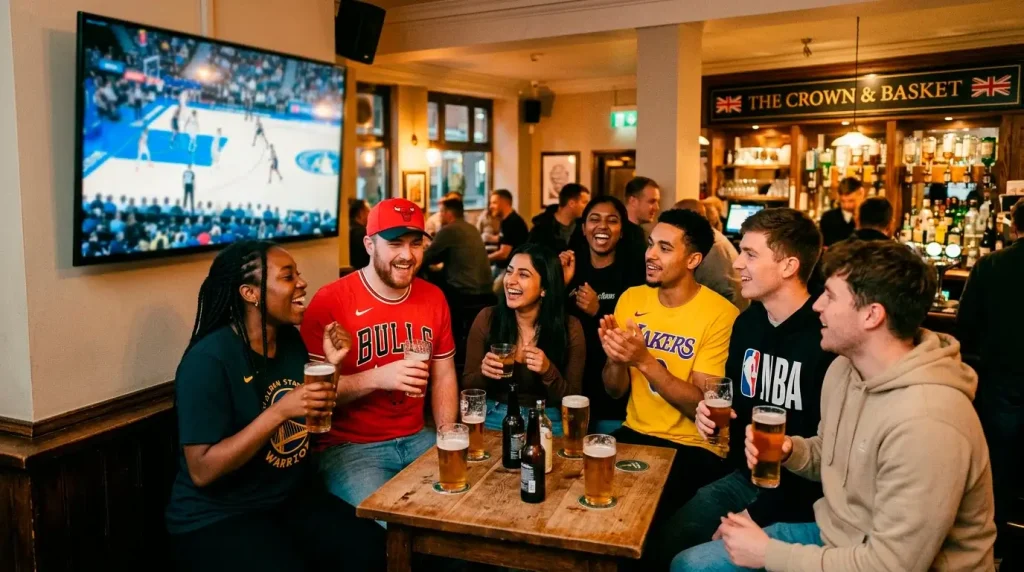
That anecdote captures something the data confirms at scale. NBA viewership in the UK has surged 40% since 2019, and the growth is accelerating rather than levelling off. What was once a subculture sustained by late-night League Pass subscriptions and imported merchandise has become a genuine part of British sporting life — with knock-on effects for everything from broadcast scheduling to the way UK bookmakers structure their basketball markets.
The Data Behind the Surge in UK NBA Viewership
I spent a week pulling apart the audience figures, and the picture is striking. The NBA’s UK audience skews overwhelmingly young: the 18-34 age bracket accounts for roughly 41% of the league’s global viewership, and in Britain the concentration is even sharper. The growth among under-30s is what separates basketball from other American imports like the NFL or MLB, which have older and more static UK fan bases.
The raw numbers tell only part of the story. What matters for the long-term trajectory is the pipeline — and the under-18 cohort watching NBA content is growing at a compound annual rate of 8.21% globally. These are not passive viewers stumbling across a game while channel surfing. They are actively seeking out NBA content on YouTube, TikTok, and Instagram before they ever sit down to watch a full broadcast. By the time they age into the demographic that drives TV ratings and betting activity, the NBA will already be part of their sporting identity.
76% of UK bettors aged 18 to 24 place their wagers on a mobile device, and this same generation consumes NBA content primarily through mobile-first platforms. The overlap between NBA fans and mobile-native consumers creates a self-reinforcing cycle: more mobile engagement means more highlight clips, more fantasy participation, and more betting activity, all of which feed back into viewership.
How New Broadcast Deals Changed Everything
When I first started watching NBA from the UK, the options were limited and expensive. You either paid for League Pass, woke up at 2am, or waited for a curated highlights package the following afternoon. The 2025-26 season changed that equation entirely.
The NBA’s new eleven-year media rights deal — worth between 76 and 77 billion dollars — was designed with international audiences in mind. In the UK, the results are tangible. Sky Sports now broadcasts over 100 live NBA games per season, a dramatic increase from the handful that were previously available on mainstream television. Amazon Prime Video carries 86 games. Between those two platforms, UK fans can watch basketball on three or four nights a week without any specialist subscription beyond what they already pay for.
The scheduling has shifted too. Some regular-season and playoff games now tip off at 8:30pm or 9pm Eastern time — which translates to 1:30am or 2am in the UK — specifically to accommodate European audiences. That is still late by British standards, but it is the difference between catching the first half before bed and never seeing a live game at all. The league has also expanded its Saturday and Sunday afternoon slate, with tip-offs at 5pm or 6pm UK time, making live NBA accessible to viewers who have no interest in setting an alarm.
The London Games and Their Ripple Effect
I was at the O2 Arena for the NBA’s London game two seasons ago, and the atmosphere was unlike any other sporting event I have attended in this country. The crowd was younger, more diverse, and more knowledgeable than I expected. These were not casual observers — they knew the rotations, they tracked the substitution patterns, and they reacted to referee calls with the kind of informed frustration you usually only hear in American arenas.
The NBA has committed to expanding its London schedule, and the league currently features more than 130 international players on 2025-26 rosters. That international representation matters for UK engagement. When a British or European player is on the court, the connection becomes personal rather than abstract. The league understands this — their international player development pipeline is a deliberate growth strategy, not a coincidence.
Each London game generates a measurable spike in NBA search interest, social media engagement, and — crucially for the betting market — account registrations at UK sportsbooks. The event itself is a loss leader for the league in the short term, but the long-term brand-building effect compounds year after year. Every fan who attends a live game, buys a jersey, or places their first NBA bet during London Game week is a potential lifelong customer.
What Growing Viewership Means for UK Betting Markets
Here is where the viewership story connects directly to your experience as a bettor. When I started placing NBA wagers from the UK, the market depth was thin. You could bet on the moneyline, the spread, and maybe the total. Player props were rare. Quarter markets were nonexistent at most operators.
Today the landscape is unrecognisable. UK bookmakers now offer dozens of markets per NBA game — player props, alternative spreads, quarter and half lines, team totals, and combination bets that would have been inconceivable five years ago. That expansion happened because viewership growth translated directly into betting volume, and betting volume justified the trading cost of maintaining deeper markets. The UK sports betting industry generates approximately 2.48 billion pounds in gross gaming revenue annually, and basketball is claiming a growing share of that figure each season.
In-play wagering — which accounted for 62.35% of online sports betting revenue in 2025 — is where the viewership-to-betting pipeline is most visible. You cannot bet live on a game you are not watching. As more UK fans tune into more NBA broadcasts, the pool of potential in-play bettors expands proportionally. Bookmakers have responded by improving their live NBA product: faster odds updates, more granular markets, and better streaming integration within their apps.
The practical benefit for you is improved odds quality. More betting volume means more liquidity, and more liquidity means tighter margins. The spread you are offered on a Celtics-Bucks game today at a UK bookmaker is sharper than the same spread would have been three years ago, because there is more money in the market competing for your attention. Adam Silver has described the NBA’s relationship with legal sports betting as “an opportunity to deepen fan engagement,” and the UK data validates that position — the market is growing precisely because the audience is growing.
Where the UK NBA Audience Goes From Here
Predicting audience growth in sport is usually a mug’s game, but the structural factors here are unusually clear. The broadcast deals are locked in for eleven years. The scheduling is moving towards UK-friendly time slots. The league is investing in London events and international player development. The demographic pipeline of young fans ageing into the core viewership bracket is already visible in the data.
The one uncertainty is competition for attention. The NBA is not growing in a vacuum — the Premier League, Formula 1, and the UFC are all fighting for the same young, mobile-first audience. What the NBA has in its favour is pace, personality, and accessibility. A basketball game lasts two and a half hours, features recognisable individual stars, and produces highlight-worthy moments every few minutes. That format is tailor-made for social media distribution and second-screen engagement, which are the channels through which the next generation of UK fans are being recruited right now.
For bettors, the trajectory matters because it determines the quality of the product available to you. More viewers means more bettors means deeper markets means better odds. That chain has been in motion for five years and shows no sign of slowing. The NBA in the UK is no longer a niche pursuit — it is a mainstream sport with a growing, engaged, and data-literate audience that is reshaping how British bookmakers think about basketball.
How much has NBA viewership grown in the UK?
NBA viewership in the UK has increased by approximately 40% since 2019. The strongest growth is among viewers under 30, driven by social media engagement, improved broadcast access through Sky Sports and Amazon Prime Video, and the NBA’s London Games programme.
Where can I watch live NBA games in the UK?
Sky Sports broadcasts over 100 live NBA games per season, and Amazon Prime Video carries 86 games. Between these two platforms, UK fans can access multiple live games each week throughout the regular season and playoffs without needing a specialist NBA subscription.
Does NBA viewership growth affect betting odds in the UK?
Yes. Higher viewership drives more betting volume, which increases market liquidity. Greater liquidity leads to tighter bookmaker margins and better odds for bettors. UK operators have also expanded their NBA market depth in response to growing demand, offering more player props, alternative lines, and in-play markets.
This material was created by the COURTSIDE team.
Related posts
The Under-30 Surge Driving NBA Betting in Britain

Why 76% of Young UK Bettors Already Bet on Mobile